

10 Types of Braiding Hair Extensions and How to Pick the Right One
Posted by HairFactory Team on Aug 20th 2026
If you’ve ever found yourself staring at a wall of braiding hair, unsure which one will actually give you the look you want, you’re definitely not alone. The right hair can be the difference between braids that feel light, look polished, and last—or a style you can’t wait to take out. In this guide, we’ll go through 10 types of braiding hair extensions and explain how each differs in texture, weight, finish, and wear. By the end, you’ll feel ready to choose the hair that fits your style, needs, and lifestyle.
Understanding Braiding Hair Extension Types
The key is to use the right braiding hair for the style's longevity, comfort, and appearance. Understanding the differences among extension types can help you avoid mistakes and achieve the results you desire.
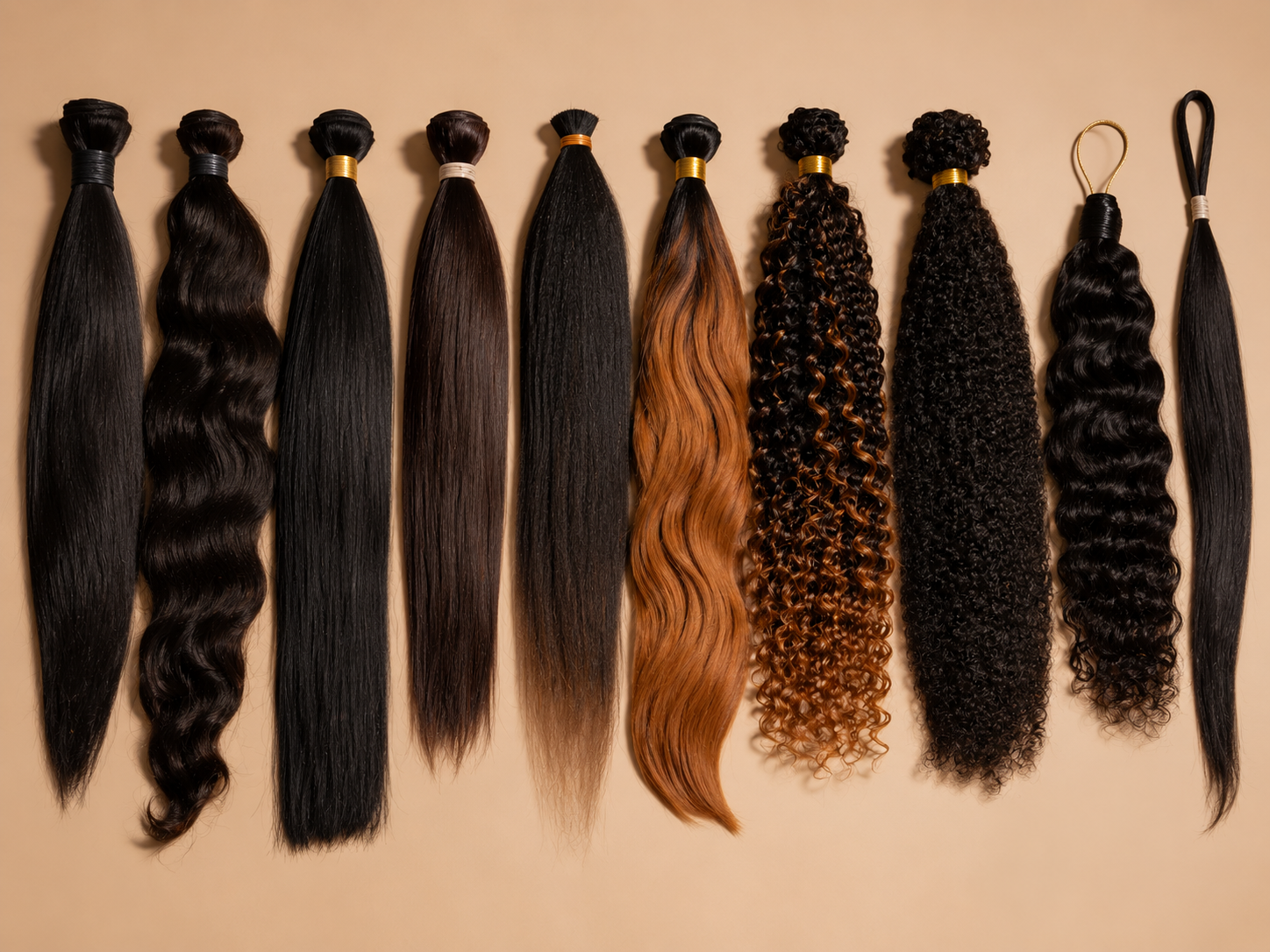
1. Synthetic Braiding Hair
What it is: Synthetic fibers that replicate natural hair texture for a reasonable budget.
Best for:
- Budget-conscious protective styling
- Short-term installations (4–8 weeks)
- Bold, uniform color consistency
Keep in mind: Synthetic fibers will not withstand high heat and may be shinier than real hair. They are ideal for festival or short-term use, but they are not as versatile as human hair.
2. Human Hair Braiding Extensions
What it is: 100% real human hair that can be dyed, heat-styled, and used in multiple installations.
Best for:
- Long-term protective styles
- Natural movement and realistic appearance
- Styles requiring heat styling or color customization
What to know: Human hair extensions are more expensive initially but more durable and cost-effective in the long run. It is best to choose virgin hair with intact and aligned cuticles to prevent matting and tangling. Single-donor bundles also give you a uniform texture from root to tip, which is great for knotless braids and styles where you want everything to blend naturally.
3. Kanekalon Hair
What it is: A high-quality synthetic fiber known for its soft texture and natural matte finish.
Best for:
- Classic box braids
- Senegalese twists
- Goddess locs
Keep in mind: Kanekalon is a great option for traditional braided looks. Kanekalon hair is lightweight and does not tangle easily. It cannot be heat-styled and may bother sensitive scalps.
4. Toyokalon Hair
What it is: A silkier, shinier synthetic fiber that's softer to the touch than Kanekalon.
Best for:
- Crochet braids
- Faux locs
- Styles requiring a softer hand feel.
What to know: Toyokalon is soft, causes no irritation, and removes easily when it's time to pull the braids out. It’s a good choice for sensitive scalps, but it doesn’t grip as well during braiding and works best with an experienced stylist.
5. Pre-Stretched Braiding Hair
What it is: Synthetic or blended hair that has been pre-stretched to reduce bulk and create tapered ends.
Best for:
- Knotless box braids
- Reducing installation time
- Achieving natural-looking tapered ends
Keep in mind: Pre-stretched hair saves time and reduces bulk. It may not be as durable as other types of braiding hair. Its lighter weight gives your braids a more natural look and puts less tension on your scalp, which is important for protective styles.
6. Ombré Braiding Hair
What it is: Two-tone or multi-tone hair that gradually changes color.
Best for:
- Adding dimension without bleaching
- Creative color expression
- Festival and statement styles
Keep in mind: Ombré hair is available in both synthetic and human hair. If you want to customize your ombré color, virgin human hair can be professionally colored to match your vision without losing its strength. Silicone-coated hair does not offer this benefit. This is especially helpful for bridal braids or any time you need your color to be just right.
7. Curly Braiding Hair
What it is: Pre-textured hair that has a defined curl pattern from loose waves to tight curls.
Best for:
- Boho braids
- Goddess braids
- Adding texture to braid ends
Keep in mind: Curly braiding hair gives you a boho, romantic look. The better the curl quality, the longer it will last. Cheaper options can lose their shape in just a few days. Human hair with natural curl memory is the best option if you desire curls that remain bouncy and defined even after washing.
8. Kinky Braiding Hair
What it is: Textured hair that mimics Type 4 natural hair patterns.
Best for:
- Seamless blending with Type 4 natural textures
- Marley twists
- Afro-textured protective styles
What to know: Kinky texture is key to achieving a look, and it is best to choose textured collections made for Type 4 hair. These move and combine with ease, which is not always the case with synthetic kinky hair.
9. Pre-Looped Braiding Hair
What it is: Hair attached to a crochet loop for ease of installation.
Best for:
- Crochet braids
- Quick protective styling
- DIY installations
Keep in mind: Pre-looped hair is so much easier to install; you can get the salon look at home. Some brands are better than others, so look out for reinforced loops to minimize shedding when you're wearing your style.
10. Feed-In Braiding Hair
What it is: Small, graduated sections of hair to be added as the braid progresses.
Best for:
- Knotless braids
- Stitch braids
- Natural-looking hairlines
What to know: Feed-in braids require natural hair that flows seamlessly with the rest of your curls. Human hair extensions work especially well for this. Search for reinforced wefts — ones that won't unravel or shed when they are cut and used in a feed-in style. Single-donor hair is also free of thin or uneven ends, making it easier to work with.
How to Select the Right Braiding Hair: A Decision Framework
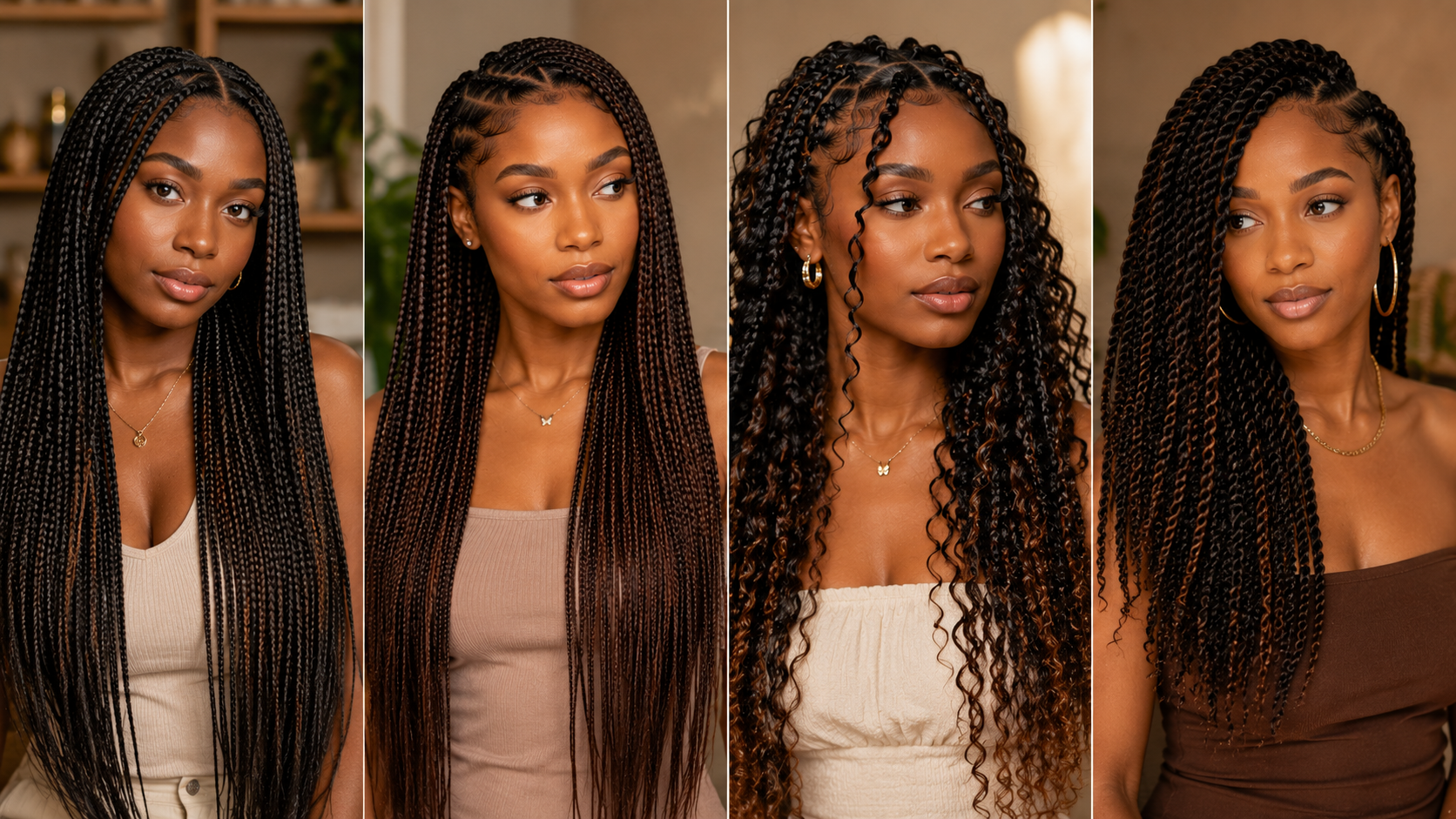
Step 1: Define Your Braid Style
|
Braid Style |
Recommended Hair Type |
|
Box Braids |
Kanekalon, Pre-stretched |
|
Knotless Braids |
Pre-stretched, Human Hair |
|
Goddess Braids |
Curly, Human Hair |
|
Senegalese Twists |
Kanekalon, Toyokalon |
|
Feed-In Braids |
Human Hair |
Step 2: Assess Your Priorities
- Human hair extensions are the longest-lasting and reusable option. Hair Factory's virgin bundles are designed to last for more than 12 months after each installation, making them an affordable option for people who braid often.
- If budget is your main concern, Kanekalon and Toyokalon synthetic hair offer great value for single-use styles.
- If scalp comfort is important to you, choose lightweight, pre-stretched options and avoid heavy synthetic fibers that can cause tension.
- If you want your braids to look as natural as possible, choose human hair with intact cuticles for the best movement and texture.
Step 3: Evaluate Fiber Quality Indicators
- Cuticle alignment: Make sure the hair flows in one direction to help prevent tangling.
- Weight per bundle: Lighter bundles are easier on your scalp.
- Weft construction: Reinforced wefts to reduce shedding.
- Heat resistance: If you intend to seal your braids with hot water, this is important.
- Sourcing transparency: Ethically sourced hair usually means better quality control.
Matching Extensions to Natural Hair Texture
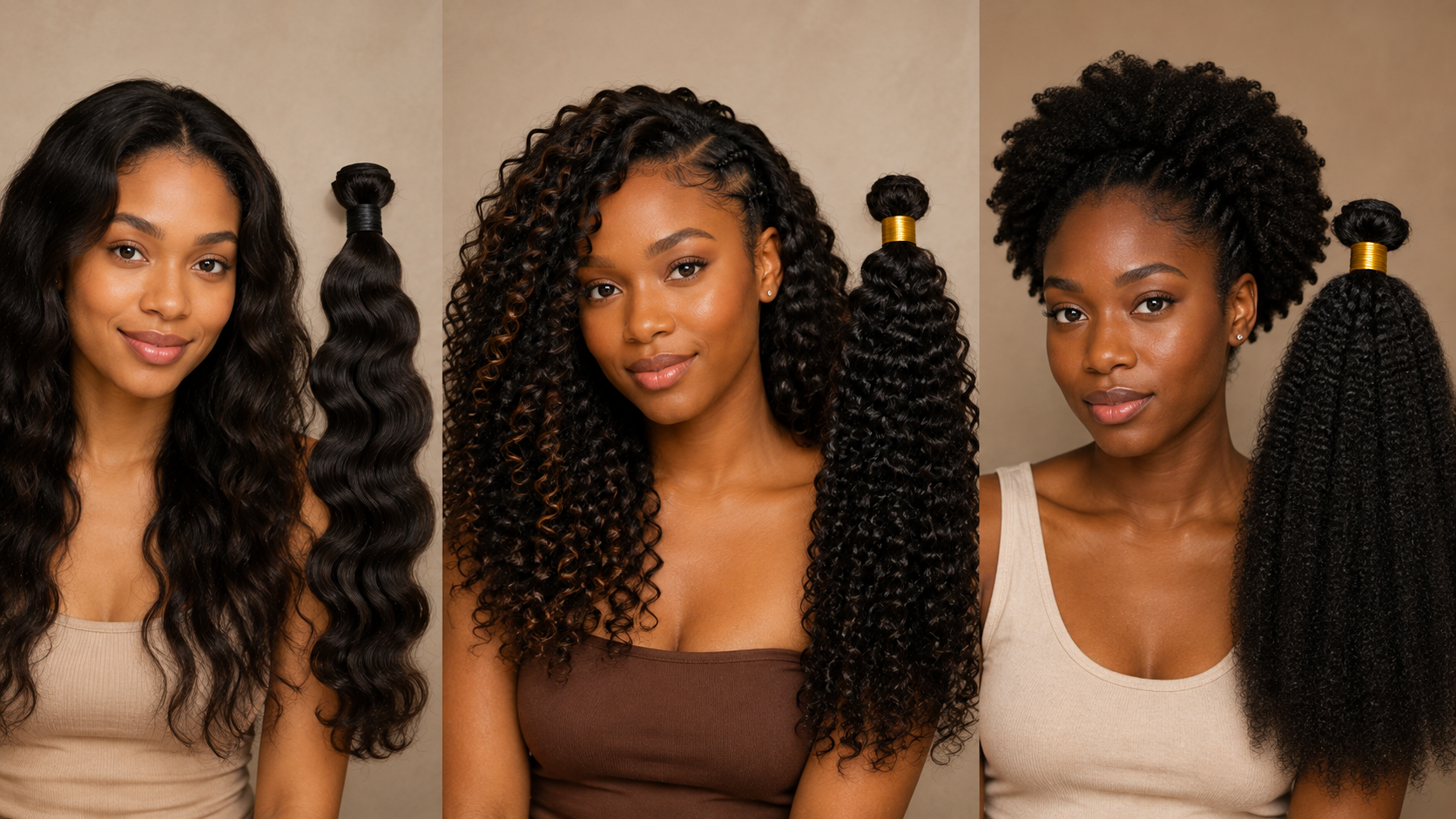
The key to successful braiding installations is texture compatibility:
- Type 2 (Wavy): Loose wave human hair or silky Kanekalon
- Type 3 (Curly): Curly or deep wave extensions
- Type 4 (Coily): Kinky texture or Marley hair for seamless blending
Extensions for Type 4 textures are often of poor quality. Some brands put short filler hairs, which may cause thin or uneven ends on your braids.
Hair Maintenance Requirements:
Synthetic (Kanekalon, Toyokalon, Pre-looped):
- Spray for frizz resistance (mousse or braid).
- No heat styling.
- A limited lifespan requires only one installation.
Human Hair:
- Sulfate-free shampoo and conditioner
- Heat protectant for styling
- Argan oil for moisture retention
- Proper storage between installations
- Potential for 12+ months of use with proper care
A good maintenance routine, such as using an argan oil treatment, helps keep the cuticle healthy and makes your virgin hair last longer.
Final Recommendations
- For classic protective styles on a low budget: Kanekalon or pre-stretched synthetic hair is the cost-effective option.
- For a natural look and long-lasting styles: Virgin human hair extensions offer the most versatility and (Cost per Wear) value.
- For professional stylists and entrepreneurs: By aligning with a quality-controlled supplier such as Hair Factory, businesses can avoid the hassle of dealing with patchy quality products and achieve a luxury service positioning.
- For special occasions: Human hair that can be customized, colored, and styled to exact specifications ensures flawless results when failure is not an option.
The right braiding hair can turn protective styling from a quick fix into a long-term investment in your hair’s health and personal style. To get the best results, select the hair that fits your style, texture, and quality requirements.
When you’re ready to bring your braid vision to life, check out Hair Factory for quality options that help you create styles you’ll feel great in. Don’t settle for hair that only looks good in the package—choose extensions that help your braids look, feel, and last beautifully.