
Alopecia & Thinning Hair Solutions: How Wigs and Extensions Can Help
Posted by HairFactory Team on Jun 16th 2026
Hair loss is way more common than people think, but most hair care tips just talk about shine or growth—not what to do if you’re actually losing hair. If you want real advice on wigs, extensions, scalp care, or regaining confidence, you’re in the right place. This guide covers how to choose the right hairpiece and maintain scalp health to help you restore confidence and protect your hair.
You start seeing more hair in your brush or on your hands. Suddenly, your go-to styles don’t look the same, and the mirror feels different. If you’re dealing with thinning hair or alopecia, it’s normal to worry about what comes next. But you can take back control. This guide is here to help you with real solutions like wigs, extensions, and scalp care, so you can feel like yourself again.
Understanding Alopecia and Thinning Hair
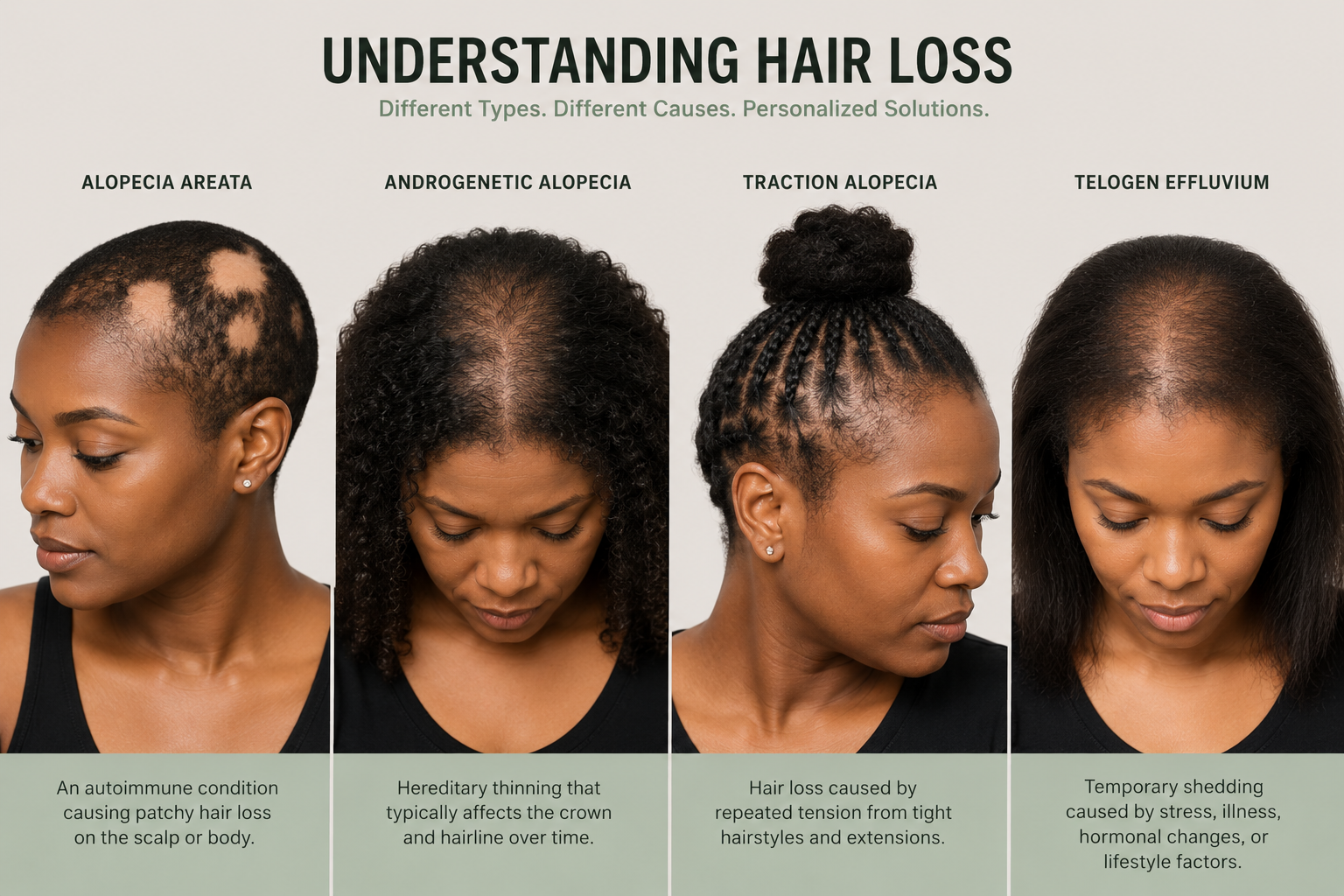
Before you choose a wig or extensions, it’s good to know what’s behind your hair loss. That way, you can pick what really works for you.
Common Types of Hair Loss
- Alopecia Areata: An autoimmune condition causing patchy hair loss. Wigs or toppers often provide the best coverage for unpredictable alopecia patterns.
- Androgenetic Alopecia: Also known as pattern baldness. It is a type of hair loss that runs in families and usually happens on the top and front of your head. You can use extensions or partial wigs to make your hair look thicker.
- Traction Alopecia: It is caused by physical tension from tight styles. If you are dealing with this, you have to be very careful when installing any hair pieces to avoid making the damage worse.
- Telogen Effluvium: Temporary, diffuse shedding triggered by stress, illness, or hormonal changes. Lightweight clip-ins or halos offer non-damaging coverage during regrowth.
- Scarring Alopecia: Permanent follicle destruction requiring full wigs, as extensions cannot attach to scarred areas.
Why Traditional Hair Extensions Can Cause Problems
Some extension methods involve pulling or rubbing against your hair, which can worsen hair loss. Sew-ins, tight braids, and heavy bundles can cause more damage if your hair is already fragile.
You don’t have to give up on extensions. The trick is to choose the right kind, use good-quality hair, and make sure they’re put in safely.
How Wigs Help with Alopecia and Thinning Hair
Wigs cover everything without pulling on your own hair, so they’re a great choice if you have moderate to severe hair loss.
Types of Wigs for Hair Loss
|
Wig Type |
Best For |
Key Benefit |
|---|---|---|
|
Lace Front Wigs |
Natural hairline appearance |
Sheer lace creates an undetectable front edge. |
|
Full Lace Wigs |
Versatile styling, including updos |
Allows parting in any direction. |
|
Monofilament Wigs |
Sensitive scalps |
Soft, breathable cap construction |
|
Hand-Tied Wigs |
Maximum comfort and movement |
Each strand is individually knotted for natural fall. |
|
Medical-Grade Wigs |
Complete hair loss |
Designed specifically for alopecia and chemotherapy patients |
What to Look for in a Wig for Thinning Hair
- Lightweight cap construction that doesn't create pressure points.
- Adjustable straps and clips for secure, tension-free wear.
- Breathable materials to prevent scalp discomfort.
- Go for a wig with natural-looking thickness. If you’re used to finer hair, super-thick wigs can look fake.
- Human hair wigs offer styling versatility and a natural appearance, ideal for changing looks. Synthetic wigs are a lighter, more affordable, and low-maintenance alternative, particularly convenient during treatment.
Synthetic vs. Human Hair Wigs: Which Is Right for Hair Loss Sufferers?
Once you know the types of wigs available, the next decision is choosing between synthetic and human hair options. Both have real merits, and the best choice relies on your lifestyle and budget.
|
Feature |
Human Hair Wigs |
Synthetic Wigs |
|
Appearance |
Most realistic look and natural movement |
Modern options can closely resemble natural hair. |
|
Styling |
Can be heat-styled and colored |
Hold their style well with minimal effort |
|
Maintenance |
Higher Maintenance |
Lower Maintenance |
|
Cost |
More expensive |
More affordable |
|
Best For |
Long-term, everyday wear |
Convenience and easy upkeep |
How Extensions Help with Thinning Hair
Extensions are best if you have early thinning, small spots of hair loss, or just want to add volume where you still have some hair.
Best Extension Types for Thinning Hair
Not every extension is safe for thinning hair. Pick ones that are gentle and give you the most volume without pulling.
- Tape-In Extensions: Lightweight, lay flat against the scalp, and evenly distribute weight. Ideal for fine or thinning hair when applied by a skilled stylist.
- Clip-In Extensions: A zero-commitment option that adds volume for special occasions without any long-term tension or adhesive.
- Halo Extensions: A wire-based system that rests on top of the head without attaching to natural hair. Perfect for telogen effluvium or active treatment periods.
- Hand-Tied Wefts: Ultra-thin wefts that create minimal bulk and allow the scalp to breathe. Requires professional installation but offers natural movement.
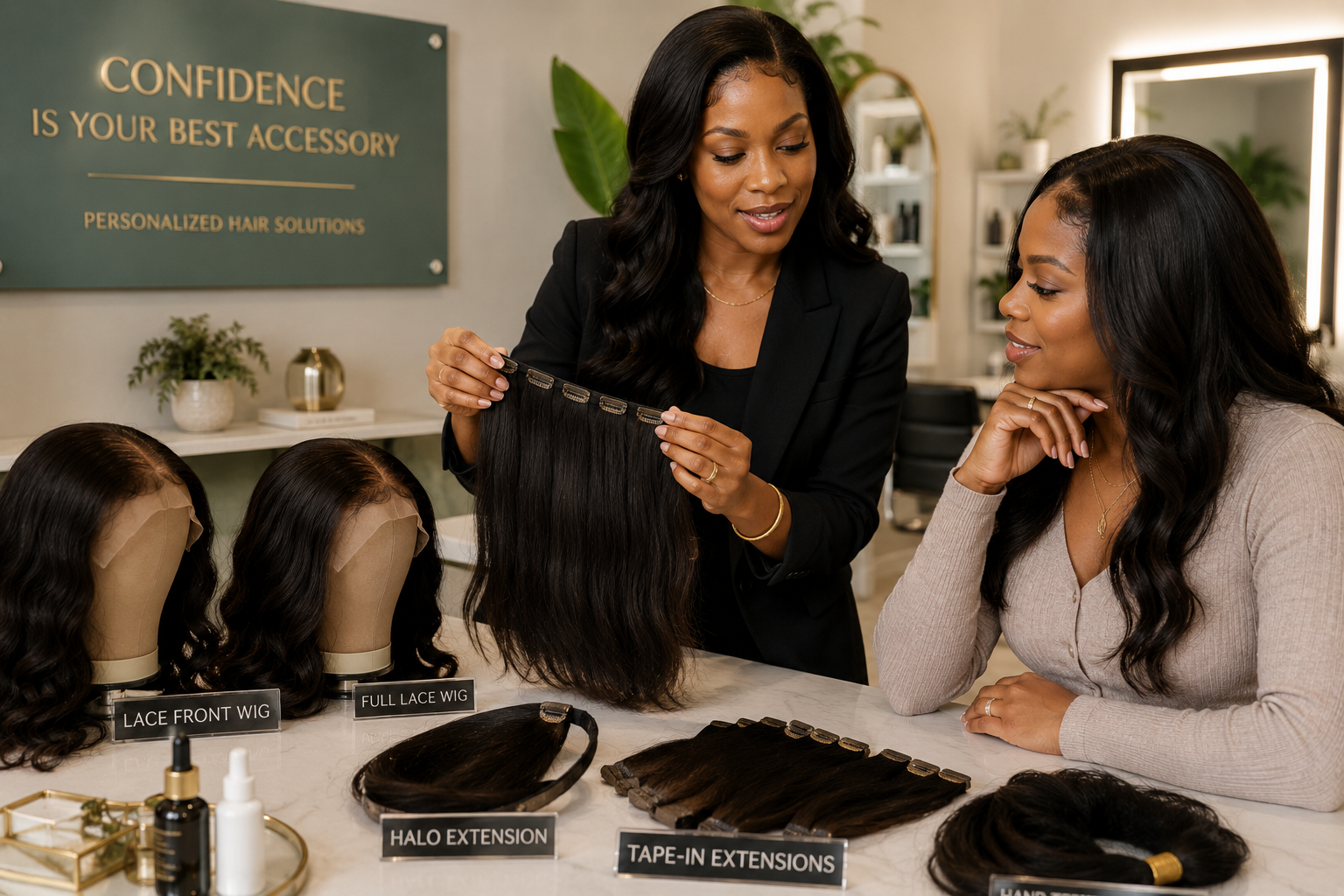
How to Use Hair Extensions for Thinning Hair Solutions Without Stressing Follicles
Proper use of hair extensions can make all the difference. Here are the best steps to reduce stress on fragile hair follicles:
- Choose lightweight extensions. Heavy ones can pull on weak roots.
- Don’t wear extensions all the time. Give your scalp a break on rest days, especially if you use clip-ins.
- Do not apply extensions to actively thinning spots; instead, add volume nearby.
- Consult a professional before any semi-permanent extensions.
Extensions to Avoid with Thinning Hair
- Tight sew-in weaves that create tension along the hairline
- Heavy micro-link installations that pull on individual strands
- Low-quality wefts that shed excessively and require frequent replacement
Why Hair Quality Matters More with Alopecia
If your hair is already fragile, the quality of your wig or extensions matters even more. Cheap hair can cause problems for your scalp and the hair you have left.
Hair Factory Difference for Sensitive Scalps
Hair Factory is different because they control the quality of its products. They make sure that their hair extensions and wigs are good for people with sensitive scalps.
- 100% Virgin Remy Hair: Cuticles remain intact and aligned in the same direction, eliminating friction-based tangling that stresses delicate scalps.
- No Silicone Coatings: Natural hair health provides shine, so the texture is consistent wash after wash—critical for those who need to cleanse their scalp frequently during treatment.
Matching Solutions to Your Specific Needs
For Alopecia Areata (Patchy Loss)
Recommended: Use full wigs or large toppers. These can cover hair loss patches without adhering to the scalp.
Hair Factory Option: Custom wigs from the PURE or BOUNCE collections offer natural movement and can be color-matched to any remaining hair, creating a blend that conceals patches without a trace.
For Traction Alopecia (Hairline Thinning)
Recommended: Use lace front wigs or pieces that have baby hair. These can create a hairline and give your damaged hair time to recover.
Key Consideration: Avoid any attachment method along the hairline. Adhesive-free grip bands or wig caps with combs positioned away from fragile areas provide security without tension.
For Diffuse Thinning (Overall Volume Loss)
Recommended: Use special extensions or volumizing toppers, such as hand-tied wefts or tape-ins, to add volume to your hair. These can make your hair look thicker without making it look bulky.
Hair Factory Option: Use single-donor hair bundles, meaning all the hair comes from a single donor. This type of hair is better than mixed-length bundles because it maintains a consistent thickness from the root to the tip.
For Active Treatment Periods
Recommended: Clip-ins or halo extensions that can be removed daily, allowing full scalp access for topical treatments like minoxidil or PRP therapy.
Maintenance Tip: Hair Factory’s versatile collections switch easily between heat-styled and natural textures. This allows one set to meet various styling needs, minimizing handling and protecting sensitive scalps during treatment.
Protecting Your Scalp While Wearing Wigs and Extensions
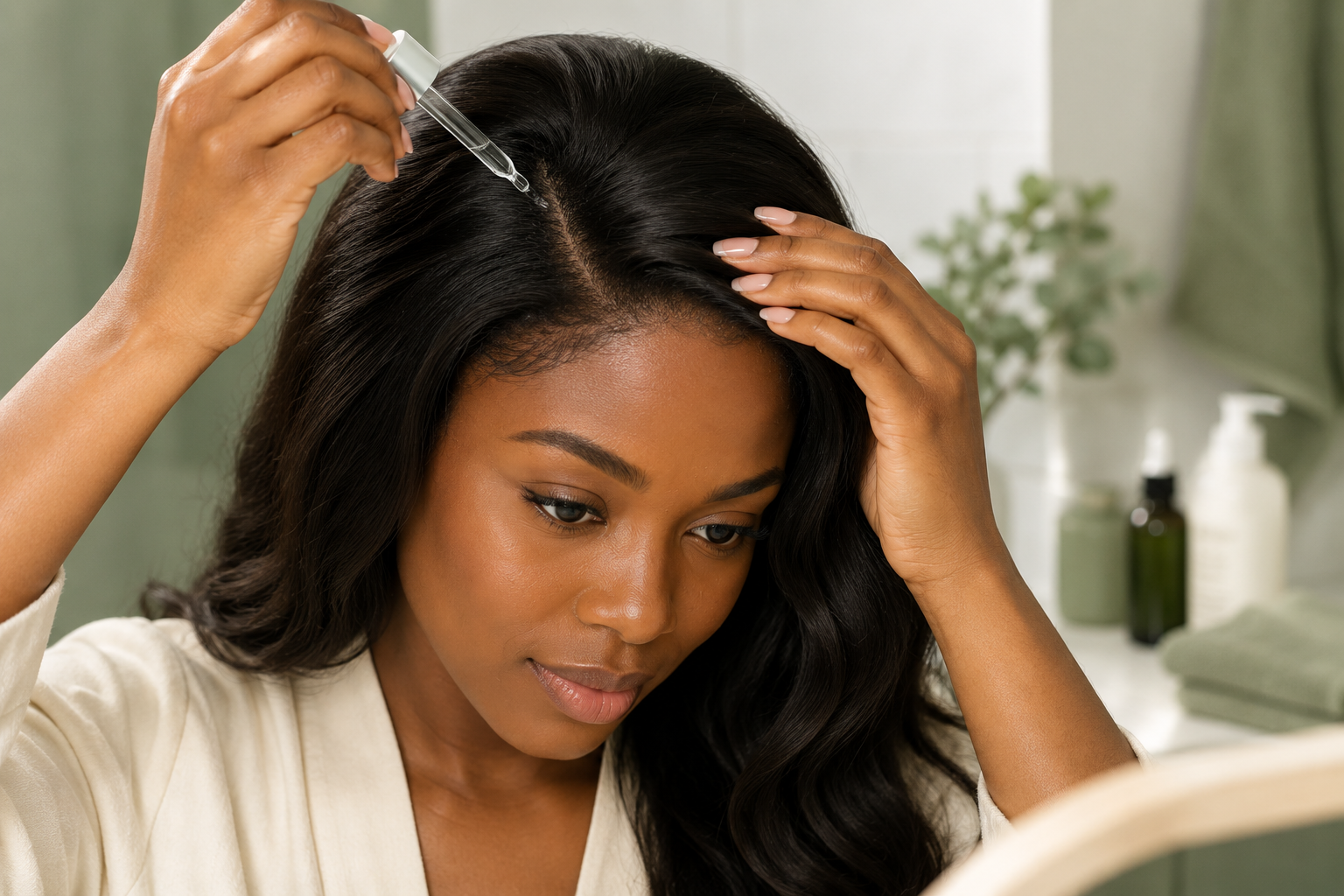
Even the best wig or extensions won’t help if you don’t take care of your scalp.
Essential Scalp Hair Care Practices:
- Cleanse regularly: Use sulfate-free shampoo to remove buildup without stripping natural oils or irritating sensitive skin.
- Moisturize the scalp: Lightweight oils or scalp serums prevent dryness under wigs.
- Allow rest periods: Remove wigs nightly when possible to let the scalp breathe.
- Avoid sleeping in extensions: Even low-tension methods create friction during sleep.
- Monitor for irritation: Redness, itching, or tenderness signals the need to reevaluate your method or materials.
Caring for Your Investment
High-quality human hair extensions require specific maintenance to achieve their full lifespan:
- Use sulfate-free, color-safe products.
- Detangle gently from ends to roots.
- Air dry when possible to preserve cuticle integrity.
- Store properly on silk or satin when not in use.
When to Consult a Professional
While this guide gives a foundation for understanding your options, certain situations require professional advice:
- Sudden or rapid hair loss—consult a dermatologist to rule out underlying problems.
- Scarring or inflammation—medical evaluation before any installation.
- First-time wig fitting—professional measurement maintains comfort and security.
- Color matching for extensions—custom lifting or toning requires skilled handling.
Cost Factors: Investment vs. Expense
Cheap extensions that tangle, shed, or damage your hair end up costing more in the long run than just investing in good hair from the start.
Calculating True Cost-Per-Wear
|
Factor |
Budget Extensions |
Premium Virgin Hair (Hair Factory) |
|
Initial Cost |
$50–$150 |
$100–$500+ |
|
Lifespan |
1–3 months |
12+ months |
|
Reinstalls |
Limited (hair degrades) |
Multiple (maintains integrity) |
|
Styling Versatility |
Low (synthetic blends melt) |
Full heat and color capability |
If you’re dealing with alopecia, the real cost of bad hair isn’t just money. It’s the stress of seeing more damage, the time spent replacing hair, and the worry that things could get worse.
Clinically Recognized Hair Restoration Options
|
Treatment |
Description |
|
Minoxidil |
Widely studied topical treatment that prolongs the growth phase of hair follicles and improves scalp circulation. |
|
PRP Therapy |
Uses concentrated growth factors from your blood injected into thinning areas. |
|
Low-Level Laser Therapy (LLLT) |
Uses specific wavelengths of light to stimulate follicle activity. |
Alopecia-Friendly Hairstyles and Looks for Women
Shorter styles, like textured bobs or layered pixies, make thinning hair appear fuller by removing weight that flattens strands. These options, along with soft waves, boost confidence at any stage of hair loss.
Head wraps, turbans, and scarves are stylish ways to cover up without putting pressure on your scalp. They’re also perfect for days when you want to give your scalp a break from wearing a wig.
Protective Hairstyles for Thinning Hair and Alopecia
- Loose, low ponytails or buns instead of tight updos.
- Silk or satin scrunchies instead of elastic bands.
- Sleep on a silk pillowcase to reduce friction.
- Avoid heat styling directly on compromised areas.
- Avoid tight braids, cornrows, or weaves on active thinning areas.
Styling Tips for Wearing Wigs and Toppers Naturally With Remaining Hair
- Match your wig density to your natural hair volume.
- Have the wig professionally cut to frame your face shape.
- Use wig grip bands or adjustable straps rather than adhesives.
- If using a topper, clip it over your natural hair at the crown for a natural-looking boost of volume.
Conclusion
The goal isn’t just to hide hair loss. It’s about not letting hair loss decide how you feel about yourself. The right wig, topper, or extension can give you coverage now and help protect your hair and scalp for the future. Look for options that prioritize comfort, lightness, and scalp health—not just covering up.
If you’re exploring your options, check out the resources and alopecia-friendly hair extensions and wigs at Hair Factory. They offer a range of options, including 100% virgin human hair, to help you feel confident and look your best.
You’ll find what fits your stage of hair loss and your lifestyle. Confidence isn’t about having perfect hair—it’s about knowing you still have choices.
FAQs
Q. Can extensions make alopecia worse?
A. Poorly installed or low-quality extensions can worsen traction alopecia. However, lightweight, low-tension methods using high-quality hair—such as Hair Factory's hand-tied wefts or V-shaped keratin bonds—minimize stress on the follicles when applied by a trained professional.
Q. What's the best wig for sensitive scalps?
A. You should look for monofilament or hand-tied caps with construction. Human hair wigs are the natural and comfortable option. Fit options can ensure the cap does not create pressure points or shift during wear.
Q. Can I color or heat-style extensions if I have thinning hair?
A. Yes, but only with 100% human hair. Hair Factory's virgin collections can be safely lifted, toned, and heat-styled, providing customization that fits your natural hair exactly—important for perfectly seamless blending with the remaining strands.
Q. How do I make a wig look natural if I still have some of my own hair?
A. Blending your natural hair with a wig or topper is easiest with a lace-front or monofilament wig. For a natural look, use a lace-front or monofilament wig that matches your hair's density and color. Have it professionally trimmed to your face shape, and opt for wig grip bands or adjustable straps for comfort.